
Miles Aren't the Measure: Two Years on the ADT
Arden Falls, West Virginia, one month in: a stranger stopped the truck and asked whether they could imagine skipping this to save miles. Rhiis Lopez on what changed after that.

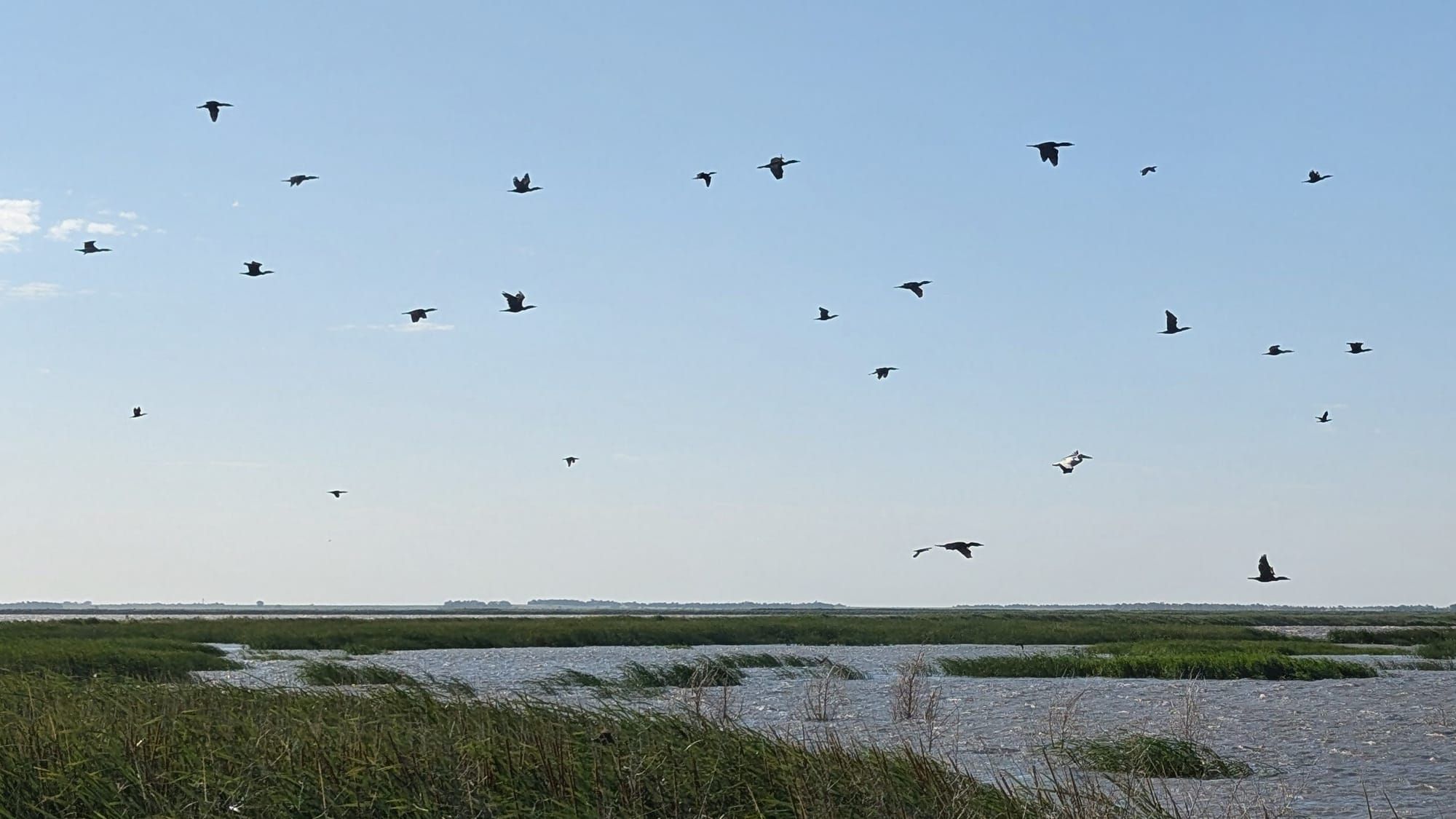
The hiking community often seems to place a great deal of emphasis on numbers. It's all about "doing the miles," right? Pace. Daily averages. Fastest known times. Like many others, I initially fell into that mindset because it was the example I saw all around me—a culture I inherited before I had enough experience to question it.
One month into our thru-hike on the American Discovery Trail, however, we began to question whether our understanding of progress was missing something important.
Trail journal entry — March 30, 2025
Suddenly, Dusty stopped the truck.
"You guys need to see this."
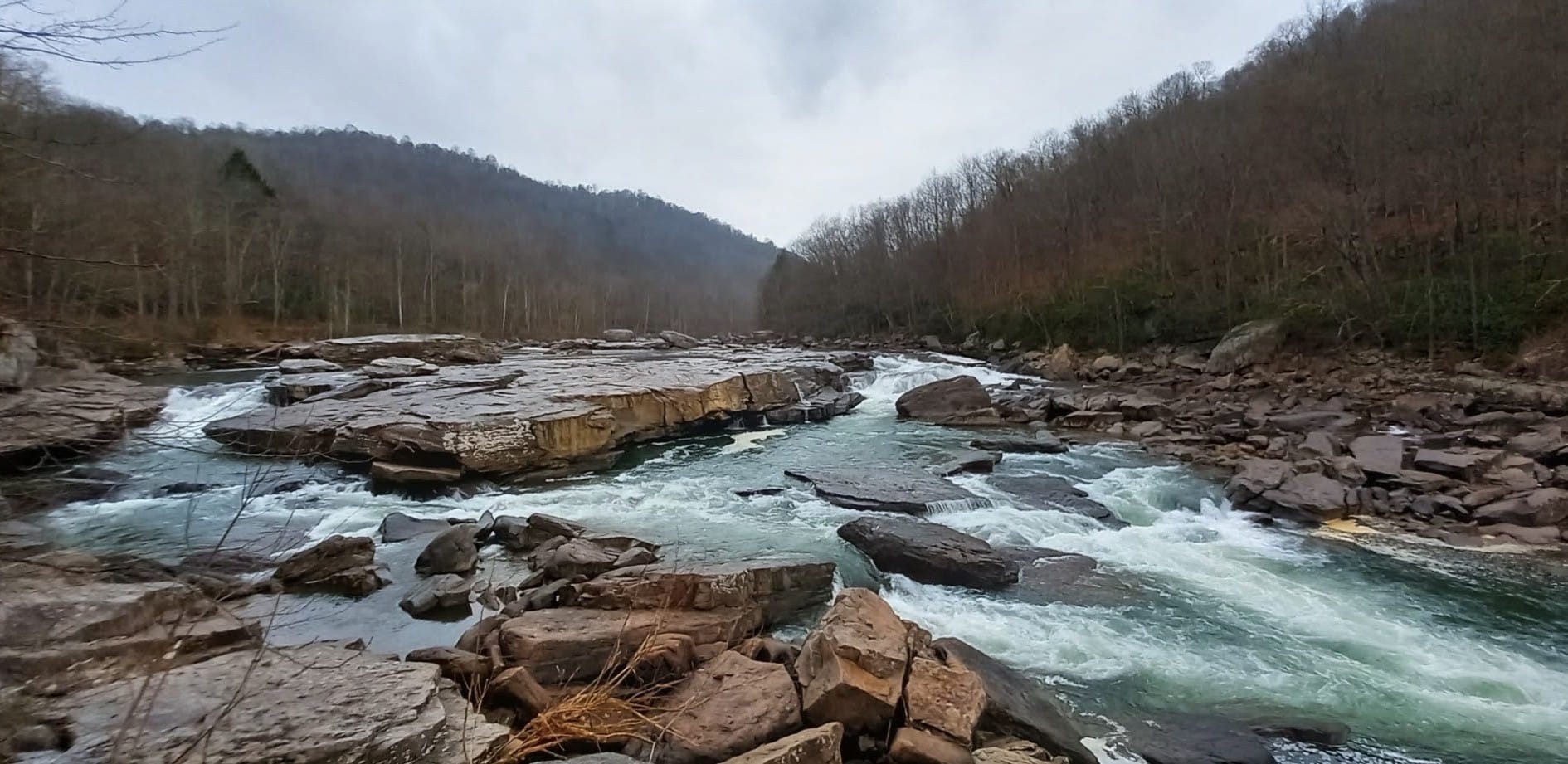
We all got out and hopped rocks until we found ourselves standing in front of a wide vista of the river, miles of waterfalls roaring past us. The green water poured over gorgeous limestone rocks. We felt as if we had stepped into the Amazon.
"This is Arden Falls. Can you imagine skipping this, in the name of hurrying up and saving miles?"
It felt as though Emily and Dusty knew everything that both of us had been thinking and feeling up until this point. I had been very focused on hitting higher daily mileage numbers, and everyone else seemed to be going so much faster than us.
"This isn't the American Conquest Trail, it's the American Discovery Trail!" Emily said.
At the time, we knew they were right. Were we measuring the journey, or were we missing it?
Sara and I have come to believe that people and experiences are what give a walk across a continent its deepest value. And that shift—from chasing the numbers to embracing what lies beyond them—has the power to transform not only a hike, but the person walking it.
Crossing North America on foot requires extraordinary commitment, but determination alone is not enough. Purpose is what transforms that effort into something meaningful.
On average, completing such a hike within a year means walking roughly 18 to 22 miles per day for six to eight months. That estimate does not account for rest days, injuries, or the unexpected opportunities that arise when we remain open to what the trail has to offer along the way.
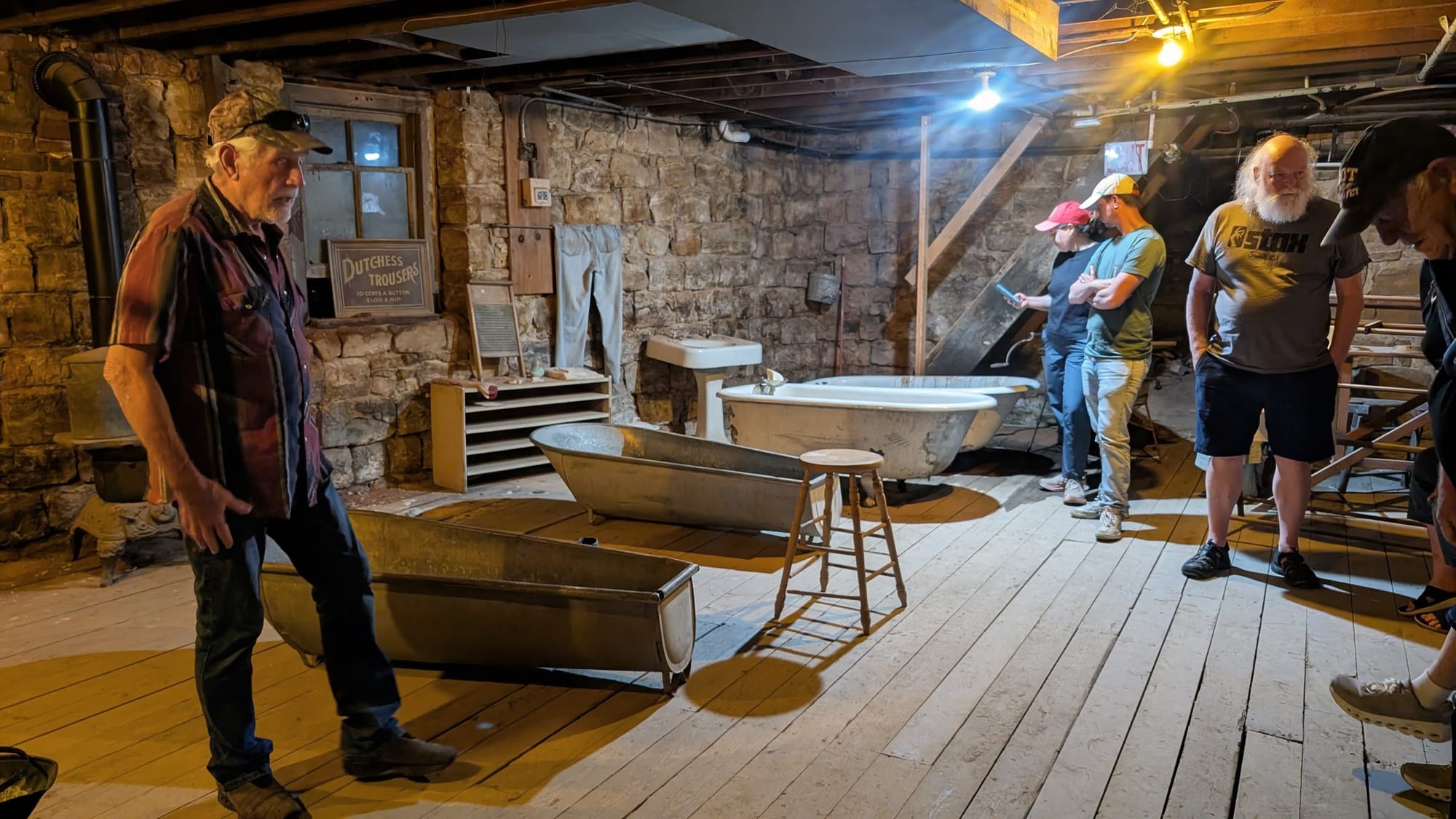
The question is whether we are willing to pass up once-in-a-lifetime experiences simply to maintain a number. Perhaps the most important discoveries on a hike like this are things that cannot be measured.
An undertaking of this magnitude carries us through places we never knew existed and introduces us to people from every walk of life. These encounters offer rare opportunities to learn, but only if we embrace them as part of the experience rather than distractions from it. Every community offers something unique, and every person has a story worth hearing. Both deserve more than a passing glance.
After some of the most meaningful weeks of our lives—through Nebraska last year and Kansas this year—I was surprised when John from Hiking America told me that many previous hikers had little positive to say about those states. We had just walked away with entirely different memories of the exact same stretches of trail. So where did the difference lie?
We have come to believe that the difference was not in what was there, but in what we were willing to notice.
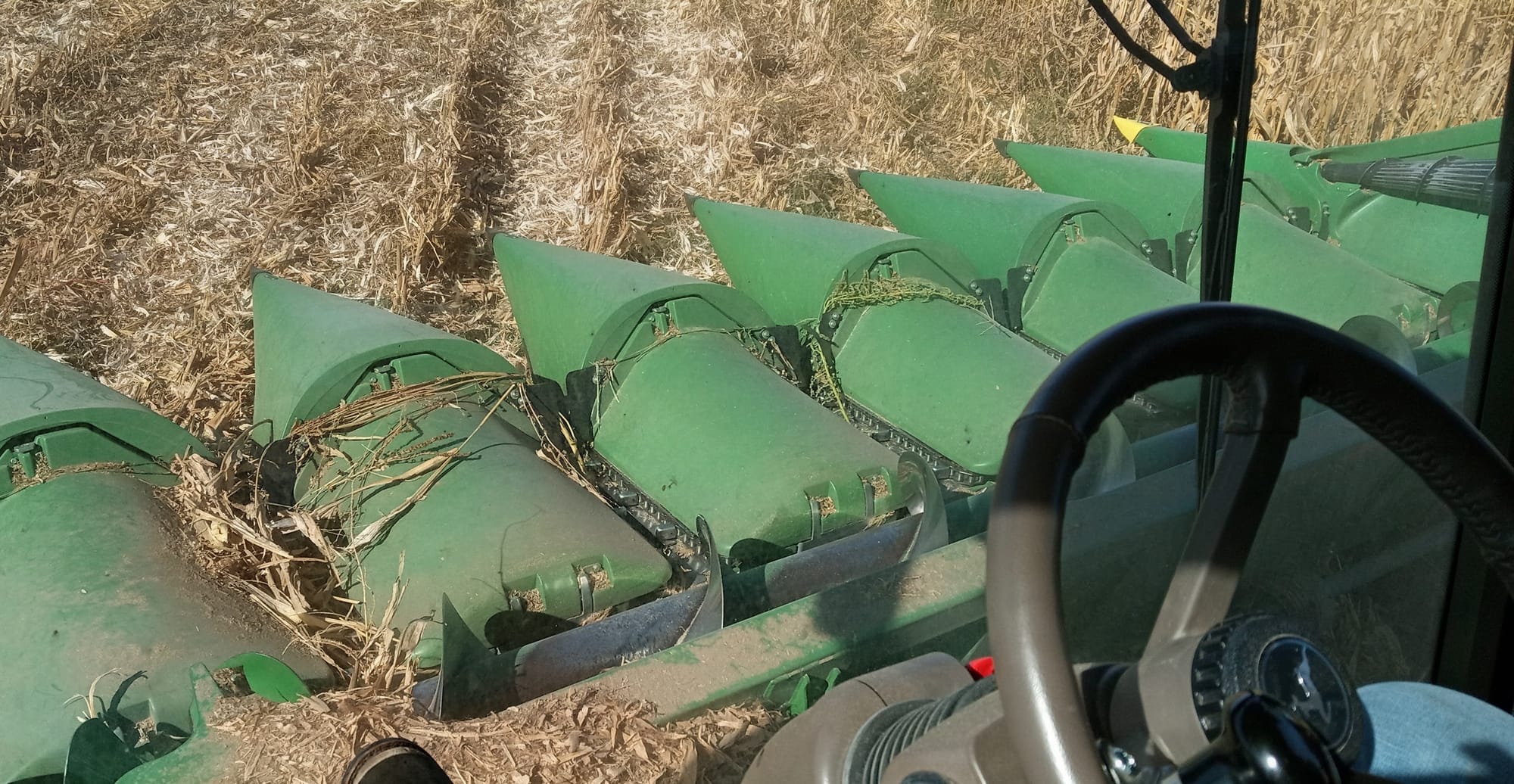
Our time on the ADT has also taught us that generosity is rarely a one-way exchange. The kindness shown to us by strangers and fellow hikers has done more than make our trip easier. It has fundamentally changed how we view our own roles within and beyond the trail community.
Some hikers, such as Renae Gupta, choose to give back by using their journey as a fundraiser. In Renae's case, to raise money for land conservation, national parks, Indigenous economic development, and immigration advocacy.
Others, such as Steve "Saunterin' Steve" Gefell, turn their focus to the hiking community itself, becoming an invaluable mentor, friend, and support network to the next class of cross-country walkers.
Then there are those who, like Sara and I, and Greg James, take the opportunities to give back as they present themselves on trail. Greg helped trail angel Nikki run her campground business, built picnic tables for a future hiker haven in Londonderry, Ohio, cleaned yards and rebuilt fences in St. Meinrad, Indiana, and volunteered in other projects along the way.
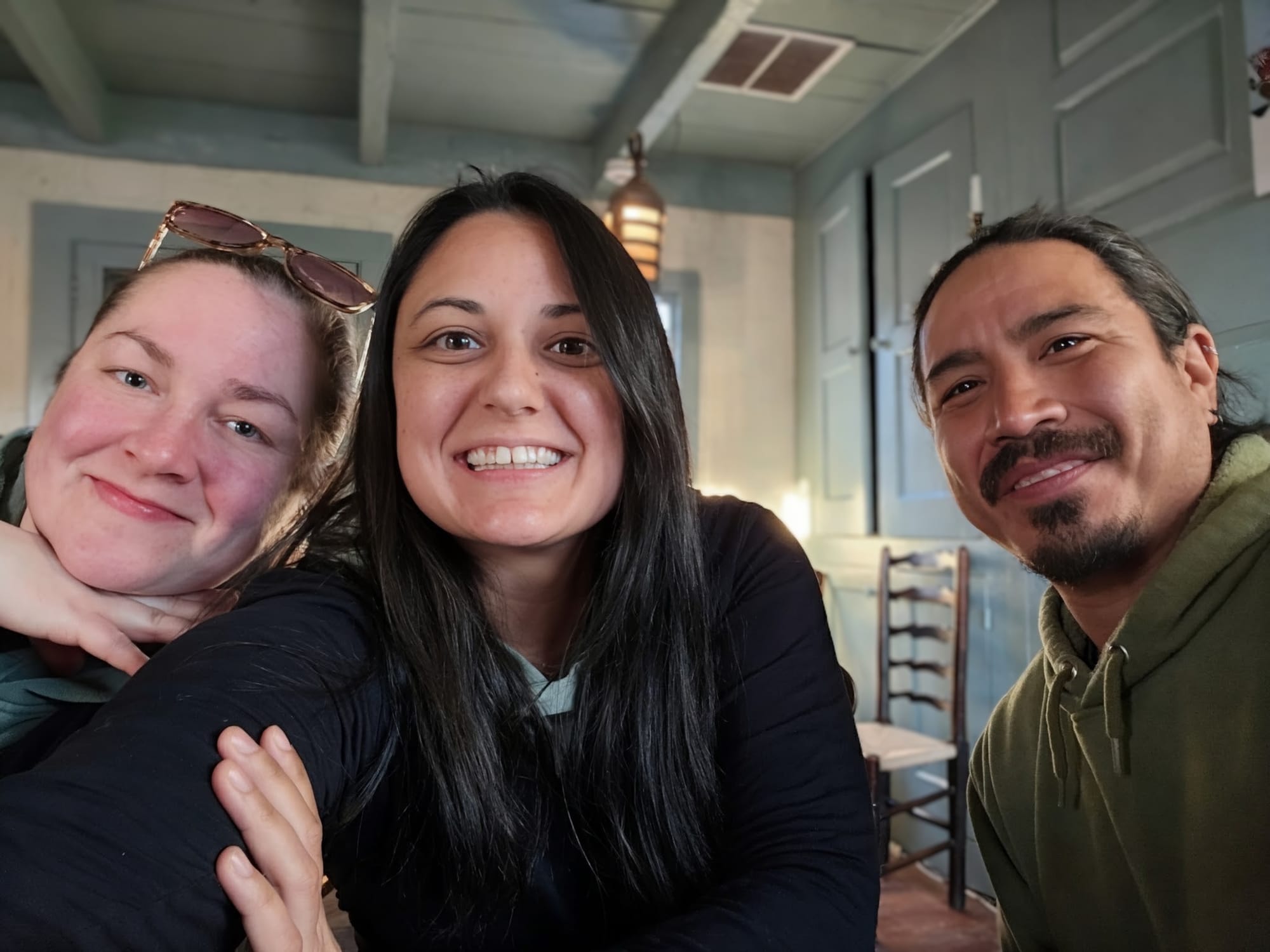
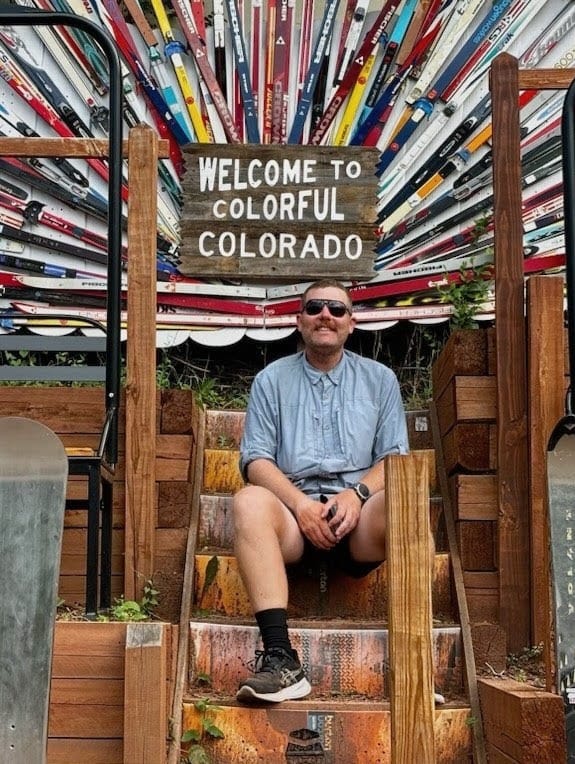
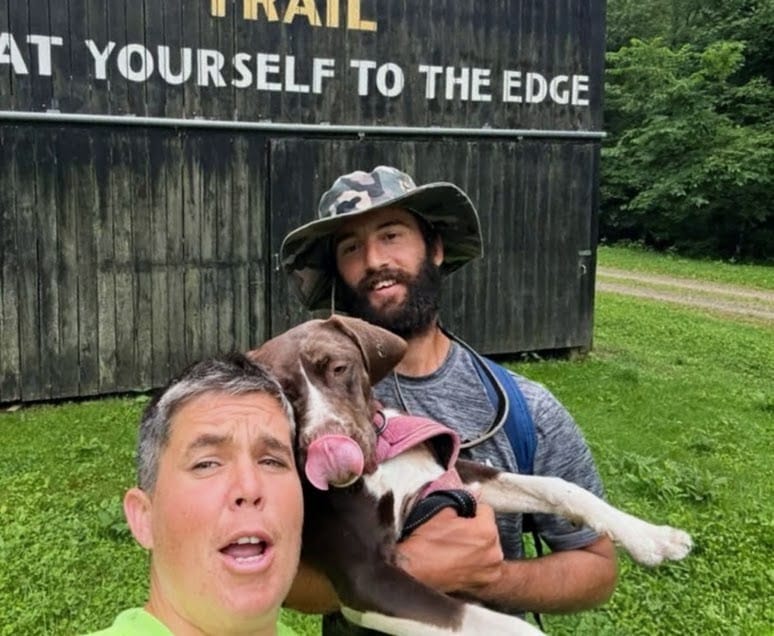
Renae Gupta, Steve "Saunterin' Steve" Gefell, and Greg James with trail angel Nikki in Ohio.
Some of our most meaningful moments came when we had the opportunity to give back ourselves—cleaning up after a devastating flood, helping with household projects, volunteering at a food pantry, preparing meals, or simply offering kindness to those who had been good to us. And what stayed with us most was that many of the people we helped were far more accustomed to giving than receiving. Allowing us the opportunity to contribute became a gift to us as well.
We came to realize that when the trail provides, it usually does so through the generosity of ordinary people. And every hiker has the opportunity to become a part of that cycle—not only by accepting kindness, but by passing it on.
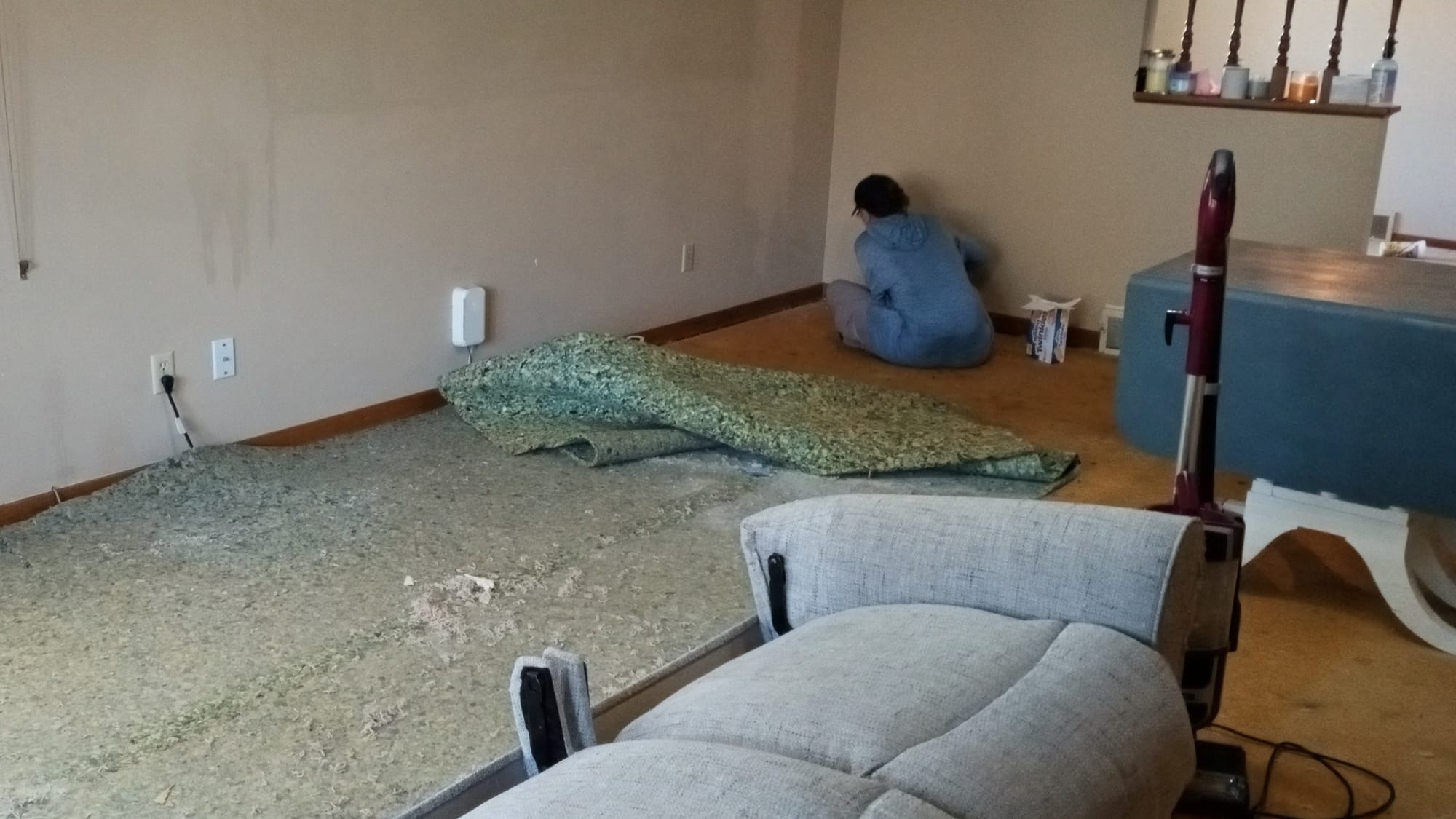
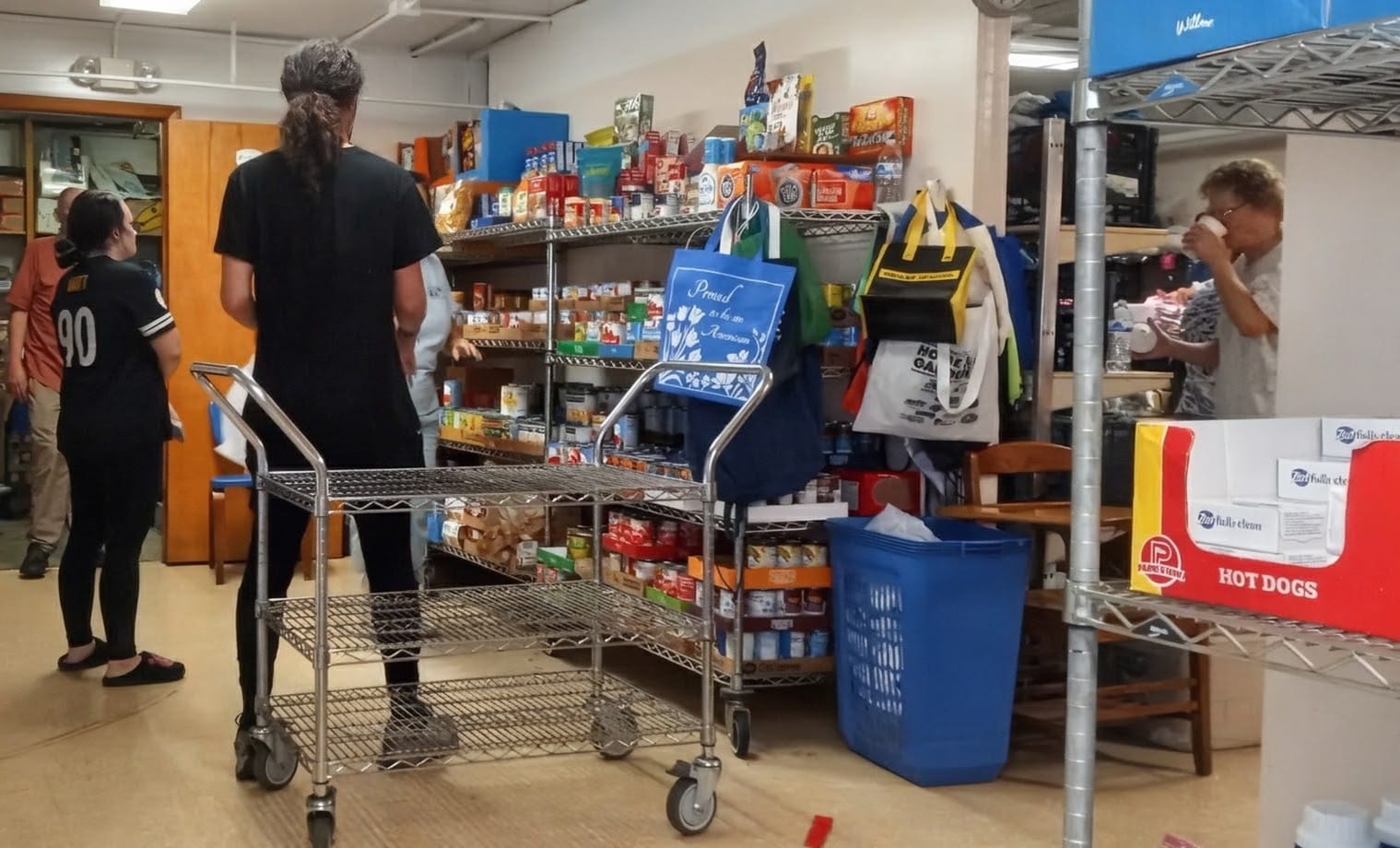
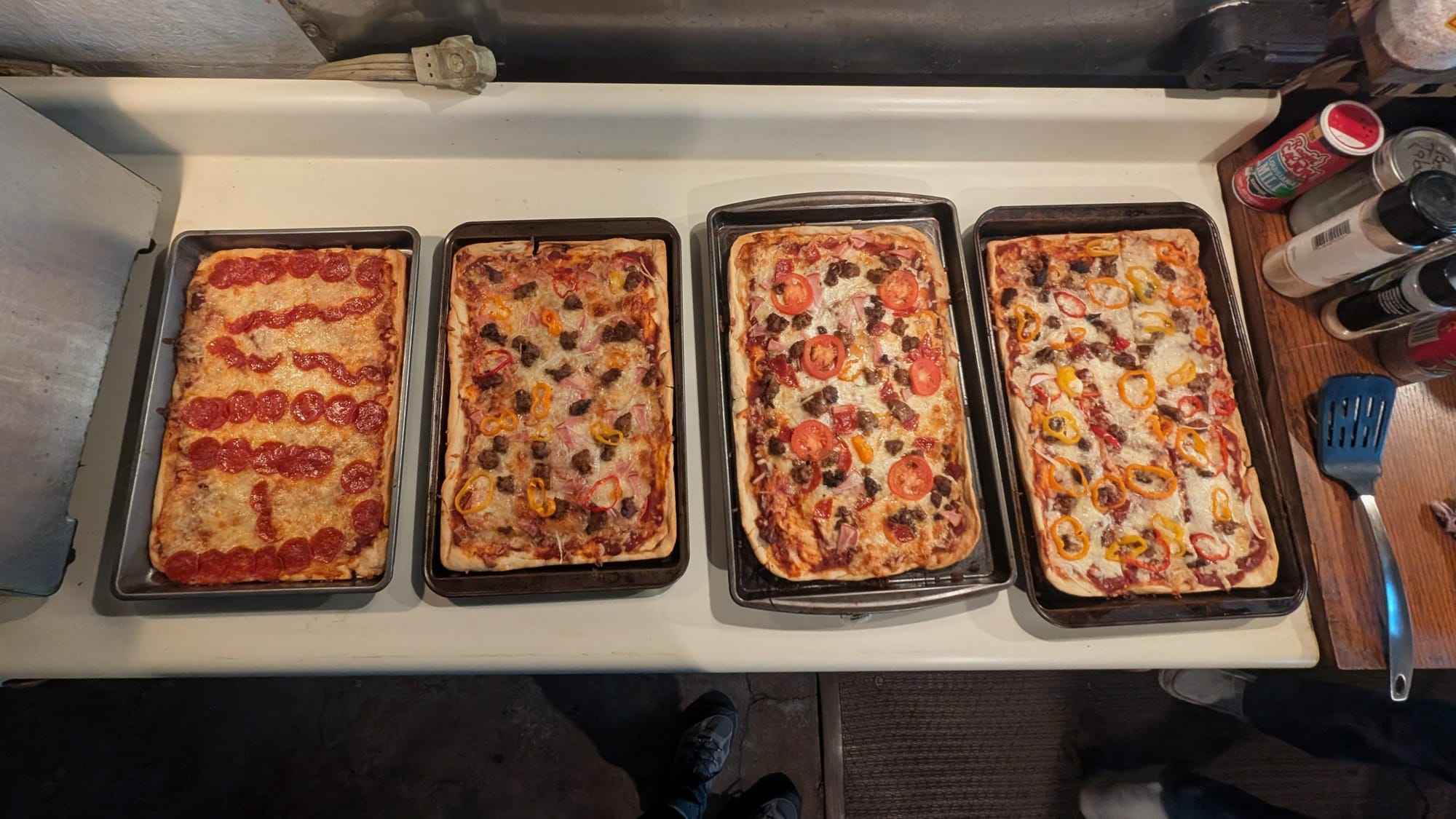
Household projects in Bayard, Iowa, a food pantry in Aurora, Indiana, and pizza from scratch. Some of the ways Rhiis and Sara gave back.
What if thru-hikers became a force of good in every community they passed through, leaving each one better than they found it?
Lessons we have carried forward
- Rest is part of the journey. Recovery is essential for long-term sustainability.
- Leave room for the unexpected. You may only pass this way once, and some of the best memories come from moments you could never have planned.
- Make time for people. Conversations, shared meals, and simple acts of kindness often become the experiences you remember long after the miles fade away.
- We are all ambassadors, representing our communities, backgrounds, and experiences. Our words and actions leave lasting impressions.
- Walking through a place is not the same as experiencing it.
- You are a guest, not the main attraction. Take an interest in the communities you pass through and appreciate the generosity you encounter.
- Gratitude and humility are invaluable trail companions.
- Meeting today's basic needs makes tomorrow's hike much easier. Plan your days around reliable access to food, water, and safe places to rest.
- Pay attention to the world around you. Free apps such as Merlin Bird ID and Seek by iNaturalist can turn a simple walk into a deeper connection with the natural world.
- Be present. During our 2025 hike, Sara and I maintained a YouTube channel and online trail journal. In 2026, we chose to step away from both. Without the pressure to document and share every experience, the journey became more rewarding. We have gained time to reflect, recharge, and fully appreciate where we are instead of thinking about the next post.
Progress isn't measured only by distance traveled, but by what we allow ourselves to discover along the way—and by the good we leave behind.
I want you to have a life-changing experience on the trail. But don't do it my way, and don't do it their way either. Remind yourself of what is important, and build your experience around that.
The trail is not just a path to follow. It is an invitation to discover.
Rhiis and Sara
August 2026
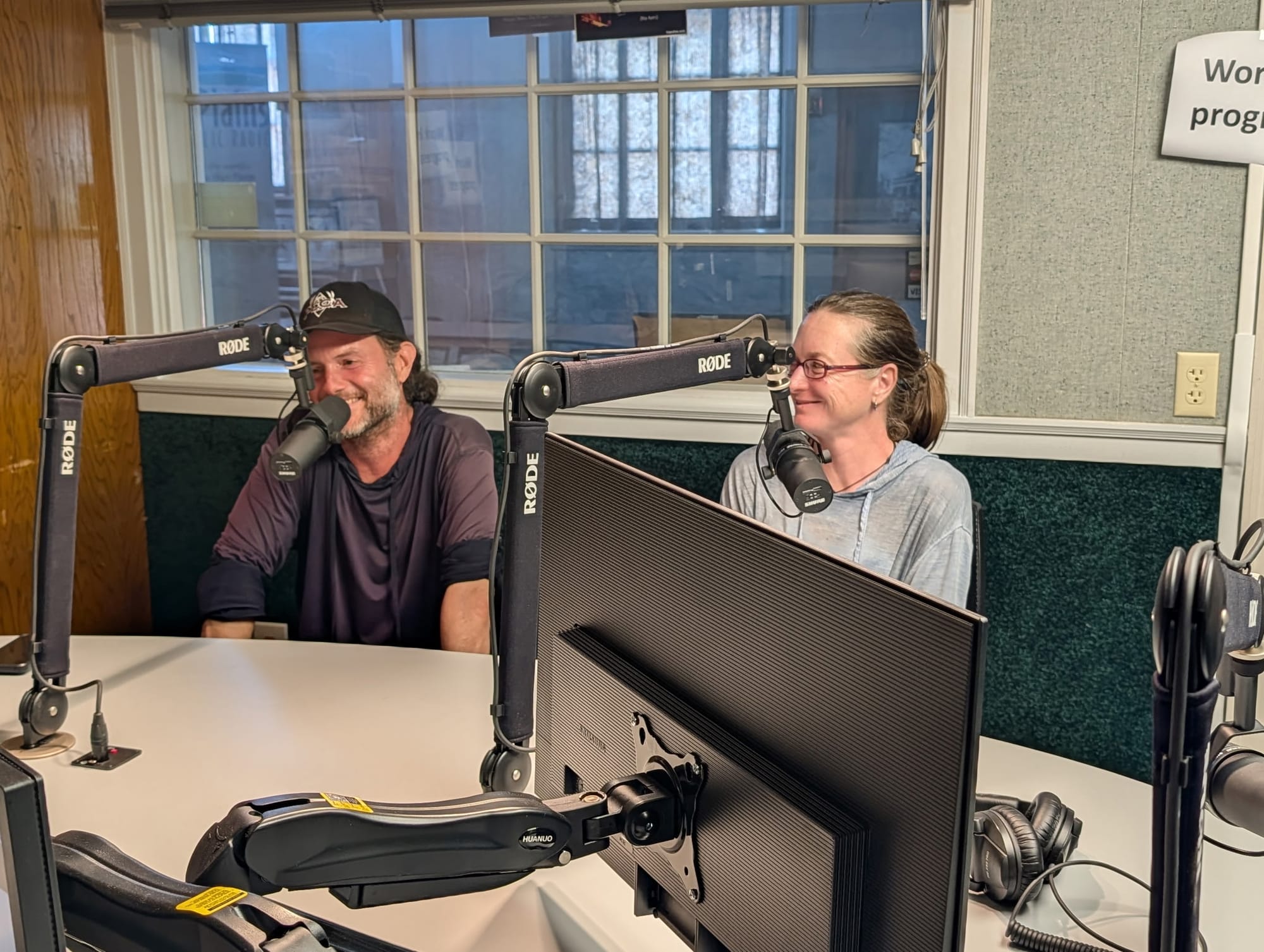
Rhiis & Sara
Westbound - Southern Route
Began: February 21, 2025 - Cape Henlopen, DE
Paused: November 5, 2025 - Julesburg, CO
Restarted: March 10, 2026 - Illinois/Indiana Line - Southern Route
Support Links: ImHikingAmerica, TrailJournals, YouTube, Venmo