
Delaware on the American Discovery Trail
Delaware · Eastern Terminus
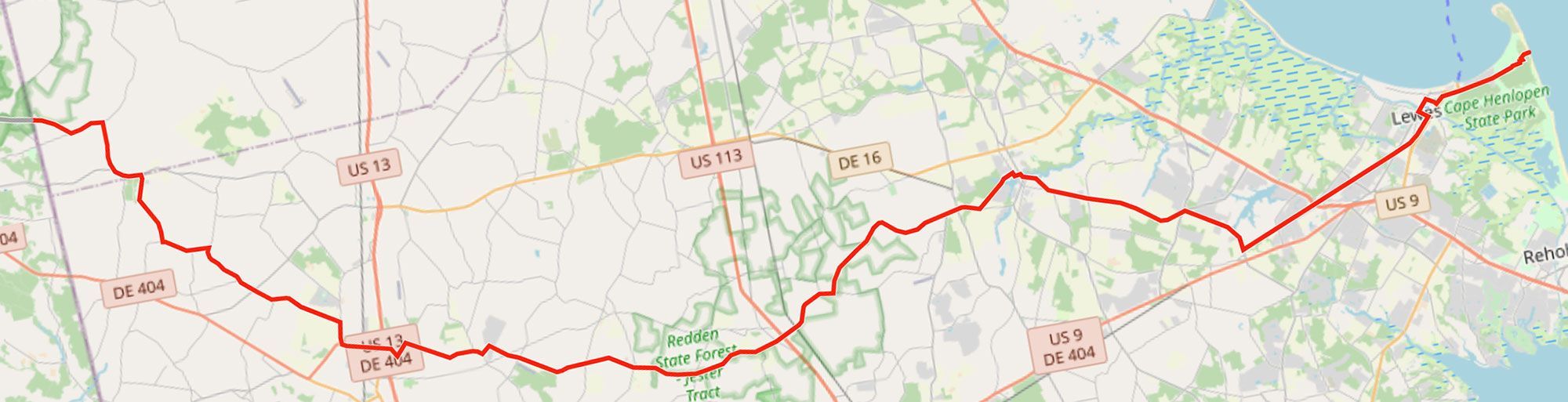
Delaware is the Atlantic bookend of the American Discovery Trail. The eastern terminus sits at Cape Henlopen, on the dune where Delaware Bay meets the ocean: mile zero for a westbound hiker, the final steps for an eastbound one.
It's the shortest state on the route: 44.2 miles, barely 1% of the coast-to-coast trail, all of it across the flat Delmarva coastal plain. Beach and pine forest give way to small towns and farmland, with no wilderness and almost no climbing.

Trail Guide
The Eastern Bookend
The trail ends, or begins, on the Atlantic sand at Cape Henlopen, in the dunes and maritime pine of a state park built over the World War II gun batteries of Fort Miles. There's camping near the terminus, on the beach at the cape and just east of Lewes, so you can start or finish right at the coast. Lewes itself, the 1631 Dutch town a few miles back, sits on the route with inns and a walkable main street. The Cape May–Lewes Ferry lands right beside the park if you're coming in from New Jersey.
A Flat Walk Across the Coastal Plain
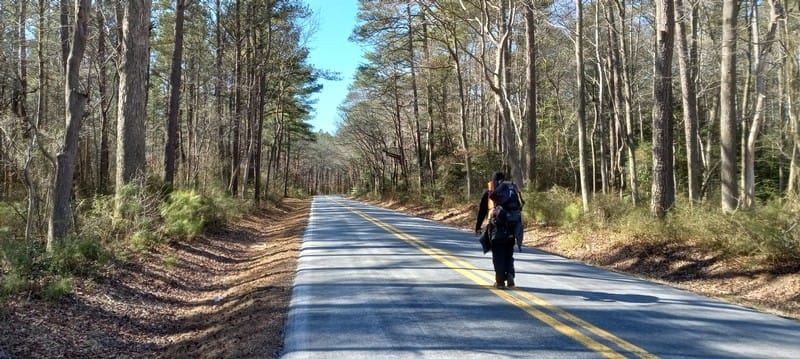
Inland, the route is quiet country roads and rail-trail. At the Maryland line the only marker is the road surface: dirt on the Maryland side, pavement once you're in Delaware. From there it runs farm roads past Bridgeville and through Redden State Forest, the one real stretch of woods and the main on-trail campground. Closer to the coast it strings together three rail-trails: the Milton Rail Trail past the Dogfish Head brewery, the Georgetown–Lewes Trail into Lewes, and the Cape–Lewes Trail out to the terminus. The one crossing to respect is US 13 near Bridgeville, a 55-mph highway with no pedestrian signal.
Sleeping and Resupply
Towns come every few hours (Bridgeville, Milton, Lewes) with groceries, post offices, and food, and the Rehoboth Beach area near the coast adds full services. Beyond the Redden State Forest campground, hikers lean on trail angels, churches, and Warmshowers hosts who've put up ADT walkers for years.
Timing
The coastal plain walks nearly year-round. Summers run hot, humid, and buggy; spring and fall are the best walking. One note at the cape: from late spring into summer, horseshoe crabs spawn on the bay beaches and shorebirds crowd in to feed, and the park ropes off nesting areas. Give the posted sections room at the terminus.
What a Delaware Crossing Looks Like
Delaware is a two- or three-day walk for most thru-hikers, an easy start or a victory lap, depending on your direction. Camp at the cape, take your time through the towns, and check current conditions before you go. 🥾🌊