
How to Hike the Great American Rail-Trail
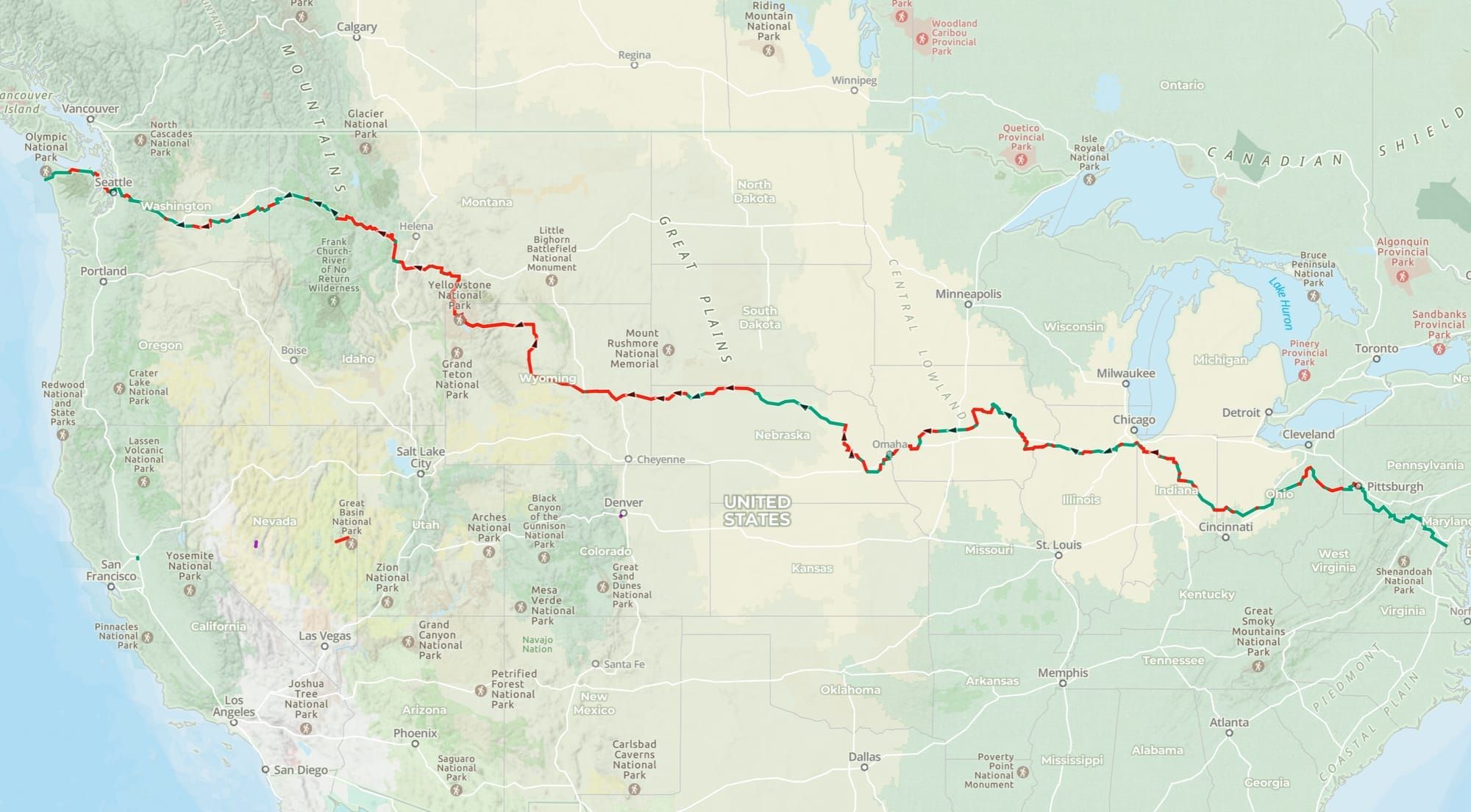
The Great American Rail-Trail is one of the most ambitious trail projects in American history, a cross-country route following converted rail corridors, greenways, and multiuse paths from Washington, D.C., to Washington State through 12 states and the District of Columbia. Spearheaded by the Rails to Trails Conservancy, it connects the C&O Canal Towpath, the Great Allegheny Passage, and the Palouse to Cascades State Park Trail into a single transcontinental route.

RTC's 2026 Route Assessment puts the trail at nearly 56 percent complete: 2,086 miles of existing trail connected by approximately 1,674 miles of gaps still under development.
Building those final sections will take years — possibly decades.
We decided not to wait.
It's Been Walked
On August 3, 2026, Bernie Krausse reached the Pacific Ocean at La Push, Washington, 130 days after stepping away from the Capitol Reflecting Pool in Washington, D.C.
This is believed to be the first known end-to-end foot thru-hike of the Great American Rail-Trail.
The question this page was created to answer in March now has an answer. It goes on foot. The route is continuous, the navigation is built, and roughly 10,000 service waypoints along the corridor carry 2026 field verification because Bernie walked past them and logged them in real time.
Can You Hike the Great American Rail-Trail?
Yes. It has been done.
The Great American Rail-Trail is hikeable today, and as of August 3, 2026 that is a mater of record rather than a claim.
RTC's 2026 Route Assessment puts the route at nearly 56 percent complete: 2,086 miles of existing rail-trail connected by 1,674 miles of gaps, sections where the future trail corridor exists but the physical trail hasn't been built yet. For cyclists, those gaps are a navigational inconvenience. For hikers, they require verified GPS routing to get through safely.
That's exactly what Hiking America has built. Our complete GPS tracks connect every gap into one continuous, navigable route — so hikers don't have to piece together their own path through uncharted sections.
,
On March 28, 2026, Double-Triple Crown hiker Bernie Krausse stepped away from the Capitol Reflecting Pool and began walking west. He reached the Pacific at La Push on August 3, 2026. Every mile he walked, he was verifying and refining the GPS data that future hikers will depend on.
The trail is here. It's hikeable. It has been hiked. And the navigation to do it is available right now.
Wondering what the Great American is actually like on foot? Here's what it looks like for hikers.
What Hiking America Provides
Hiking America has built complete GPS navigation for the entire Great American route — including every gap between existing trail sections. Using existing hiking trails, forest paths, and carefully researched corridors, we connected the entire route into one continuous, navigable journey.
Here's what's available right now:
Complete GPS Tracks — Full route files covering every mile, including all gap sections. Compatible with Gaia GPS, Google Earth, Garmin, and most major GPS platforms. These are yours free, no subscription required.
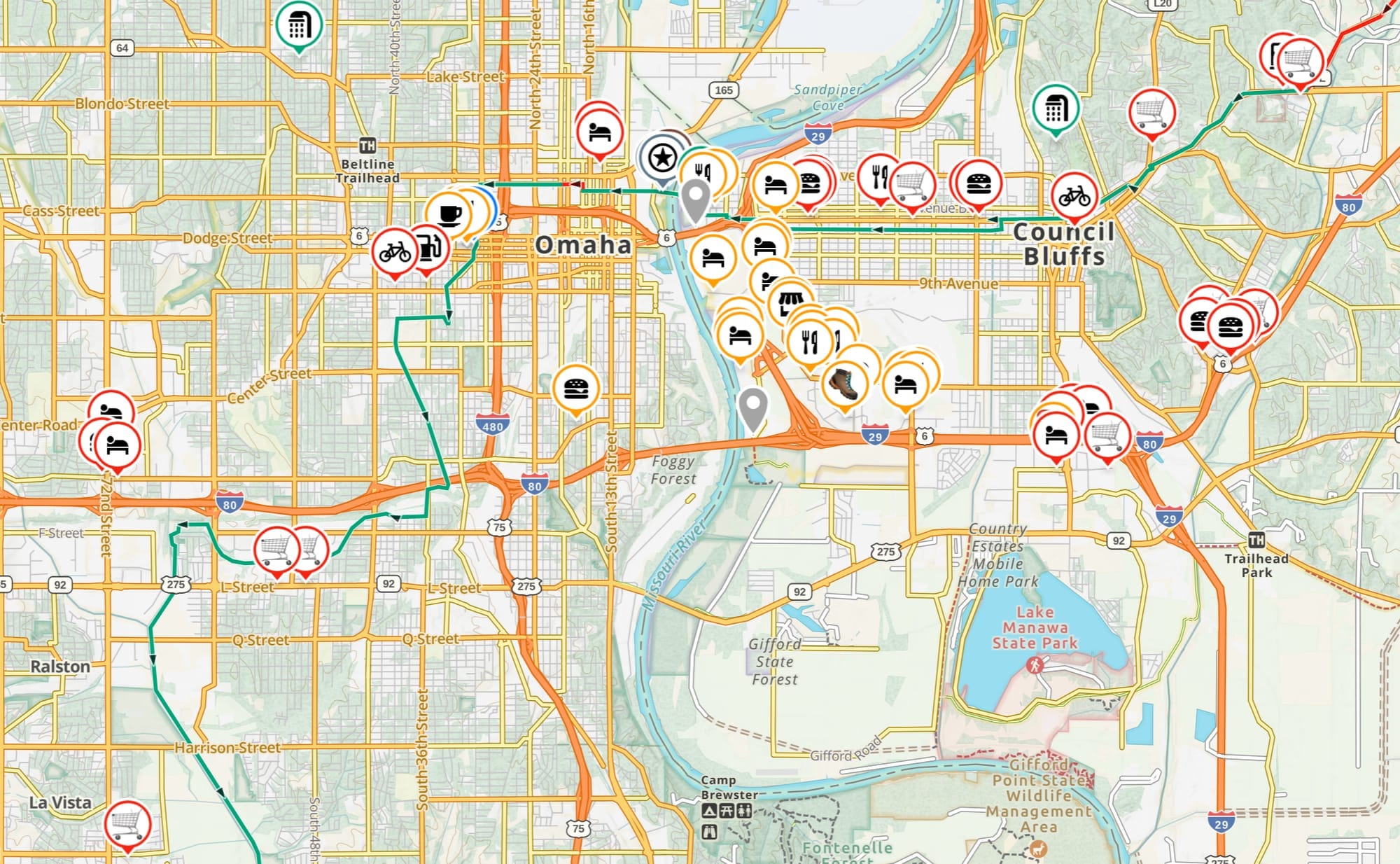
Service Waypoints on Gaia GPS. Roughly 10,000 waypoints covering resupply, camping, water, restrooms, charging, and hiker notes, organized in Gaia GPS. Every one of them carries 2026 field verification from Bernie's thru-hike. This layer is included in your Hiking America subscription at no additional charge.
Gap Route Navigation. The 80+ sections between existing trails are where hikers need the most support. Our GPS tracks provide verified routing through every gap, so you're never left guessing where the trail picks back up. All of them have now been walked.
Field verification: complete. When this page went up in March, waypoint verification was in progress. It isn't anymore. Bernie logged and confirmed conditions across the full route between March and August 2026: water sources, camping, resupply, trail surface, and route adjustments. Turn-by-turn guides are the remaining piece and they're in production.
How Long Does It Take to Hike the Great American Rail-Trail?
One data point now exists, and it's a fast one.
Bernie Krausse walked it in 130 days, March 28 to August 3rd, averaging roughly 25 to 35 miles per day. That pace reflects more than 66,000 career miles and a Double-Triple Crown. Treat it as the fast end of the range, not the expectation.
For most hikers, plan on 5 to 7 months. At 20 to 25 miles per day with regular zero days, 6 to 7 months is realistic.
For context, that's comparable to the Appalachian Trail in duration but nothing like it in character. The Great American follows converted rail corridors with low elevation grade, which means far less vertical gain than the AT. Longer daily distances are the norm, and the gap sections add navigational complexity that a blazed wilderness trail doesn't have.
A few factors that affect your timeline:
Direction matters. A westbound start in late March or early April, Bernie's timing, puts you through the mid-Atlantic and Midwest before summer heat peaks in the Plains, and gets you into Wyoming and Montana in late summer when conditions are most manageable. That timing is now proven end to end. Eastbound has its own logic, particularly for hikers who want to start in the Pacific Northwest in early summer.
The Plains deserve honest mention. Nebraska and Iowa are long, exposed stretches with fewer services than the eastern half of the route. Most hikers move faster here out of necessity, and water planning becomes more deliberate.
The gap sections are the biggest variable. The 80+ gaps vary widely in difficulty. Some are short road walks, others are multi-day routes. Your GPS data determines how efficiently you navigate them.
The Cascades are the last real obstacle. The Snoqualmie Tunnel runs 2.3 miles unlit beneath the crest and closes November 1 through May 1 in most years for falling ice. Plan your finish around it.

Bernie Krausse Walked It
Bernie Krausse is one of America's most accomplished long-distance hikers,a Double Triple-Crowner with the Appalachian Trail, Pacific Crest Trail, and Continental Divide Trail each completed twice, an ADT thru-hiker from the Class of 2022, and more than 66,000 career miles. Between March 28 and August 3 of 2026, he completed what is believed to be the first known end-to-end foot thru-hike of the Great American Rail-Trail.
Hiking America worked directly with Bernie to map and verify the route. His walk was real-time field verification of our GPS data, the same process that made our American Discovery Trail navigation the most trusted resource available.
He logged waypoints, documented conditions, and confirmed the services layer serious hikers need to plan their own journey. That work is finished, and it's in the data.
Read the full trail dispatches from all 130 days right here on HikingAmerica.com.
A Hiker's Trail
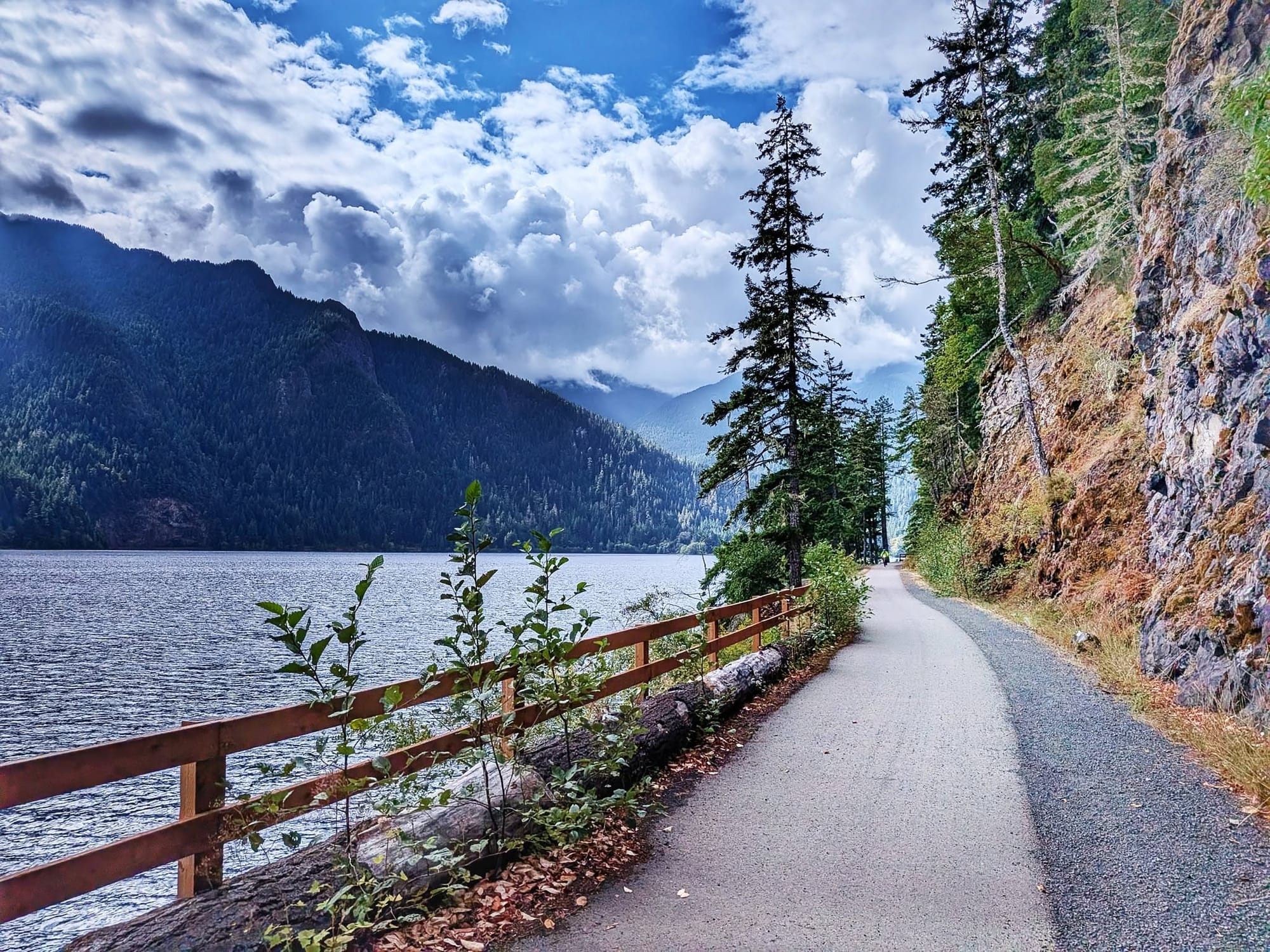
You've probably seen the Great American marketed as a multi-modal trail, and most of the photos feature cyclists. That's most of the story so far. The trip reports are cyclists. The planning resources assume a bike underneath you. For four months, nearly everyone Bernie passed was on wheels.
Long-distance hikers have not had the Great American on their list, because nobody had established that it goes on foot.
It goes on foot.
Hiking America is focused on what this trail means for hikers specifically. The planning needs are different. The pace is different. The water carries, the camping considerations, the resupply strategy: all of it changes when you're walking.
That's what we've built. The hiker's guide to the Great American Rail-Trail.
Questions first?
Route, gaps, surfaces, water, hiker alternates, and how the mountain reroutes actually work. Read the Great American Rail-Trail FAQ.
Already a Hiking America Subscriber?
The Great American services layer is included in your existing subscription at no additional charge. Roughly 10,000 waypoints, field-verified during the 2026 thru-hike, sitting in your Gaia GPS alongside your American Discovery Trail data.
New to Hiking America?
A Hiking America subscription gives you access to our complete navigation data for both the American Discovery Trail and the Great American Rail-Trail: GPS tracks, service waypoints, turn-by-turn guides, and real-time trail updates.
All for one subscription.
$15/month or $89/year — cancel anytime.
Or start with the free Great American GPS tracks and see what Hiking America is all about.
Stay Connected
📧 Subscribe to our newsletter for trail updates and trail dispatches 📱 Follow us on Facebook or join our Facebook Group 📺 Subscribe to the Hiking America YouTube Channel for video updates